Home › Services
Stamped and decorative concrete: a real slab with a finish on top
Decorative concrete is sold with photographs of brand-new work, glossy and perfectly colored. What you are really buying is two things stacked together: an ordinary structural slab that has to be built as carefully as any driveway or patio, and a decorative surface that will need cleaning and resealing for as long as you own it. Judge both halves, and ask about the second one before the first is poured.
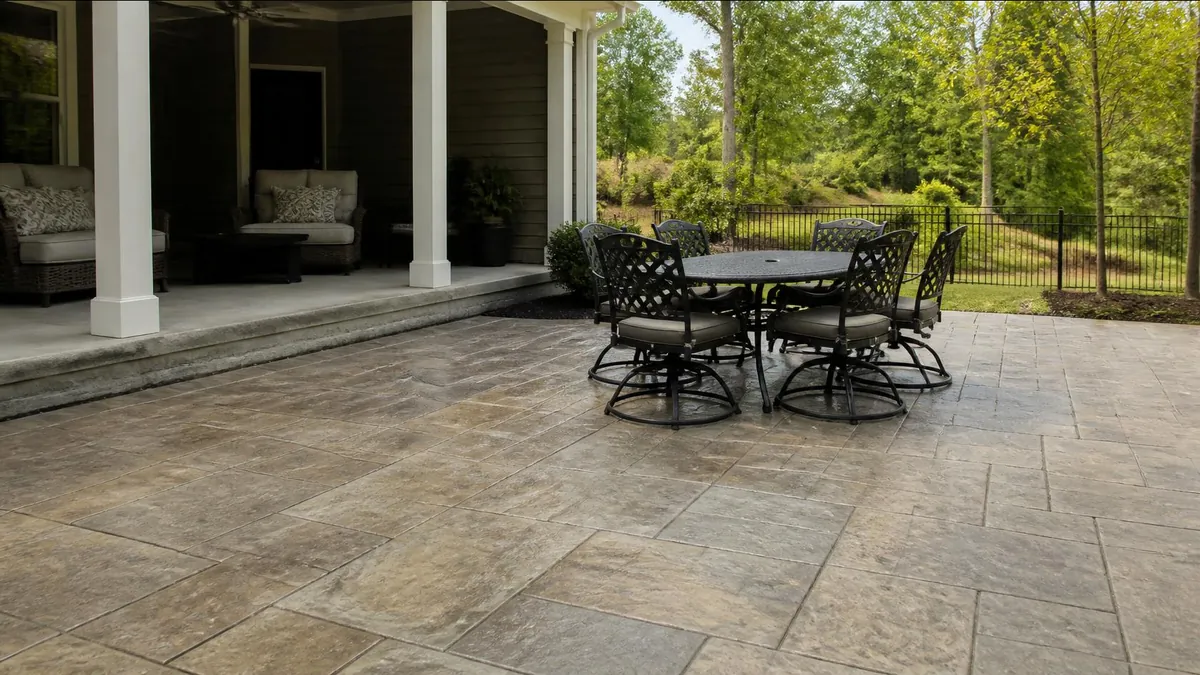
Two jobs in one: the slab underneath and the look on top
Stamping, coloring and exposing stone happen in the top fraction of an inch. Everything below that is plain concrete doing plain work, and it follows the same rules as any other slab in East Tennessee. It needs a firm, compacted stone base over the red clay, a sensible thickness for the loads it will carry, reinforcement placed where it helps, and a surface that sheds water away from the house.
This matters because decorative work is harder to repair than a gray slab. A crack through a broom-finished patio can be filled and mostly forgotten. A crack through a colored ashlar-slate pattern, or a sunken corner beside a pool, is very hard to hide, because matching the color and texture of a patch years later rarely succeeds. When comparing quotes, read the base, thickness and joint sections as closely as the pattern and color choices.
Stamped patterns and how texture is pressed in
Stamping uses flexible mats pressed into the surface while the concrete is still plastic. Common looks include ashlar slate, cut stone, flagstone, running bond brick, cobblestone and wood plank. There are also seamless texture skins that add a stone grain without grout lines. Timing is everything: stamp too early and the pattern slumps, too late and the mats barely mark the surface or leave uneven depth.
Because stamping is a race against the set, crew size and slab size have to match. A large pour on a hot Knoxville afternoon can outrun the people doing the pressing, leaving shallow areas at the far end. Detailing tools are used along edges and next to walls where full mats do not fit, and the quality of that hand work shows around steps, drains and posts. Look closely at those spots in photos of past work.
Integral color, color hardener and release color compared
There are three common ways to put color into decorative concrete, and they behave differently over time.
- Integral color is mixed into the whole batch at the plant or on site. The color runs all the way through, so chips and wear reveal the same shade, though it tends to be softer and less vivid.
- Color hardener is a dry shake broadcast onto the fresh surface and troweled in. It gives stronger, more saturated color and a denser top layer, but that color lives only near the surface.
- Release color is a powder or liquid used to keep stamp mats from sticking. It stays in the low spots of the texture and gives the antiqued, two-tone look many people want.
- Many jobs combine methods, such as an integral or hardener base color with a darker release for contrast. Ask which ones your quote includes.
Exposed aggregate as a lower-upkeep alternative
Exposed aggregate removes the thin cement paste at the surface to reveal the stones inside the mix. It is usually done by spraying a surface retarder after finishing and washing or brushing away the paste once the slab has stiffened, or by seeding decorative stone onto the surface first. The result has strong traction, hides dirt and leaf stain, and generally shows wear less than stamped work.
It still benefits from a sealer, and the look depends on the stone available in the mix, so ask to see a sample made with the aggregate that will actually be delivered. Washing too early loosens stones; washing too late leaves a cloudy film. Exposed aggregate is a sensible choice for walks and pool decks where grip matters and the owner wants less upkeep than a heavily colored stamp.
Why control joints still belong in a decorative slab
Some buyers ask the installer to leave out joints so the pattern looks continuous. That is a mistake. A decorative slab shrinks and moves exactly like a plain one, and without joints it will crack wherever it chooses, often straight through the middle of the design. Planned grooves are what keep random cracks out of the pattern.
Skilled installers hide joints inside the pattern, sawing along a grout line of an ashlar layout or between rows of stamped brick, so the cut reads as part of the stone. Joints should still be spaced at typical intervals and run from inside corners. Ask the contractor to show on a sketch where each joint will fall relative to the pattern before any concrete is ordered.
Slip resistance around pools, spas and wet entries
Deep stamped textures can actually give decent grip, but a glossy film-forming sealer can turn any decorative surface slick once it is wet, especially in shade where algae forms. Around pools, hot tubs, downspout outlets and front stoops that catch rain, traction should drive the choice of pattern, finish and sealer.
Ask whether an anti-slip grit can be added to the sealer, whether a lower-sheen product is available, and whether a lighter texture skin or exposed aggregate would suit the wet zone better. Darker colors also get noticeably hot under summer sun, which matters for bare feet on a pool deck. Stand on a sample board with wet shoes before deciding.
Sealers, resealing and East Tennessee winters
Most stamped and colored concrete is sealed to deepen color, resist stains and slow water absorption. Acrylic sealers are common and easy to recoat; other chemistries last longer but can be harder to redo. Every sealer wears, fades or clouds with sun and traffic, so plan on periodic cleaning and resealing, commonly every few years depending on exposure. Sealer applied too thick or over a damp slab can turn milky white.
Winter is the hard test. Knoxville sees many nights that freeze and thaw, and water trapped in the surface expands each time. Colored hardener layers and sealer films can flake when that happens, especially where de-icing salts drip from cars or get spread on steps. Air-entrained concrete, good curing and an intact sealer all help. Sand or a gentle product is kinder to decorative work than rock salt.
Color variation and what to see before signing
Concrete is a natural product, and color shifts between truckloads are normal. Changes in cement, water content, weather on the day and finishing timing all affect the final shade. A single pour usually looks more consistent than a job split across several days, and additions years later almost never match exactly. Ask how the contractor manages batch differences on larger jobs.
Before you sign, ask for a physical sample board in your chosen pattern and colors, with sealer applied, and look at it in daylight both wet and dry. Ask for photos, or better, addresses you can drive past, of the contractor's decorative work that is several years old, not just last month's. Aged work shows how their sealer holds up, whether their joints hid well and how their color survives Knoxville summers and winters.
Stamped and decorative concrete — common questions
Is stamped concrete weaker than regular concrete?
No. The stamping only shapes the surface, and the slab underneath is ordinary concrete. Strength comes from the mix, the thickness, the base and the curing, not from the pattern. Where decorative work does differ is in upkeep and repair. Cracks and settling are much harder to disguise on a colored pattern, so good preparation below the surface matters even more than it does for a plain slab.
How often does stamped concrete need resealing?
There is no fixed calendar, but periodic resealing every few years is typical for exterior decorative concrete. Surfaces in full sun, around pools, or on driveways that see car traffic and winter salts wear faster than a shaded back patio. Signs it is time include fading color, water soaking in rather than beading, and dull patches in traffic paths. Clean the surface well before any new coat.
Which coloring method holds up best over the years?
Each has tradeoffs. Integral color runs through the whole slab, so chips reveal the same shade, but the tone is usually softer. Color hardener produces richer color and a tougher surface, but the color sits near the top. Release color adds contrast in the low spots and wears first in high-traffic areas. Many good jobs combine methods. Ask to see aged examples of each approach.
Can I skip the saw cuts so the pattern stays clean?
It is not a good idea. A decorative slab shrinks and moves like any other, so leaving out joints invites random cracks that cut right across the design. A skilled installer places joints along grout lines or pattern seams so they blend in. Ask for a sketch showing where joints will fall, and make sure inside corners and long runs are covered.
Is stamped concrete slippery around a pool?
It can be, mostly because of the sealer rather than the texture. Glossy film-forming sealers get slick when wet. Around pools, choose a pattern with some texture, ask for a lower-sheen sealer, and consider an anti-slip additive mixed into the topcoat. Exposed aggregate is another option with strong grip. Lighter colors also stay cooler underfoot during East Tennessee summers.
Will winter salt damage my decorative concrete?
De-icing salts make freeze-thaw damage worse by pulling more water into the surface. On decorative work that can mean flaking sealer, peeling color hardener and pitted spots near where cars park. Keep the sealer in good shape, rinse salt residue off in spring, and use sand or a gentler product on steps and walks. Air-entrained concrete and proper curing give the surface a better start.
Why does my new slab not match the sample exactly?
Some difference is normal. A sample board is made in small quantities under controlled conditions, while the slab comes from full truckloads poured on a particular day in particular weather. Water content, temperature and finishing time all shift the shade. Sealers also darken color. Ask the contractor before signing how close a match to expect and how they limit variation between loads.
Talk through your project
Start with the address, what you want poured or replaced, rough dimensions, and a few photos of the area and any existing concrete.
Related work
Concrete Driveways
New driveways, extensions and full tear-out and replacement.
Concrete Patios
Backyard patios and pads that shed water away from the house.
Walkways & Steps
Sidewalks, front walks and steps on sloped East Tennessee lots.
Garage, Shed & RV Slabs
Pads sized and reinforced for what will actually sit on them.
Concrete Repair & Replacement
Deciding between patching, lifting and tearing out a failed slab.