Home › Services
Concrete replacement and repair that starts with a diagnosis
When a driveway, patio or walkway starts to look bad, the instinct is to ask what it costs to tear it out and start over. Sometimes that is the right call. Often it is not, and occasionally it is the wrong call even though the new slab looks perfect, because whatever broke the old concrete is still waiting underneath. The better first question is why it failed. The pattern of damage usually tells you, and the answer points to the repair that will last.
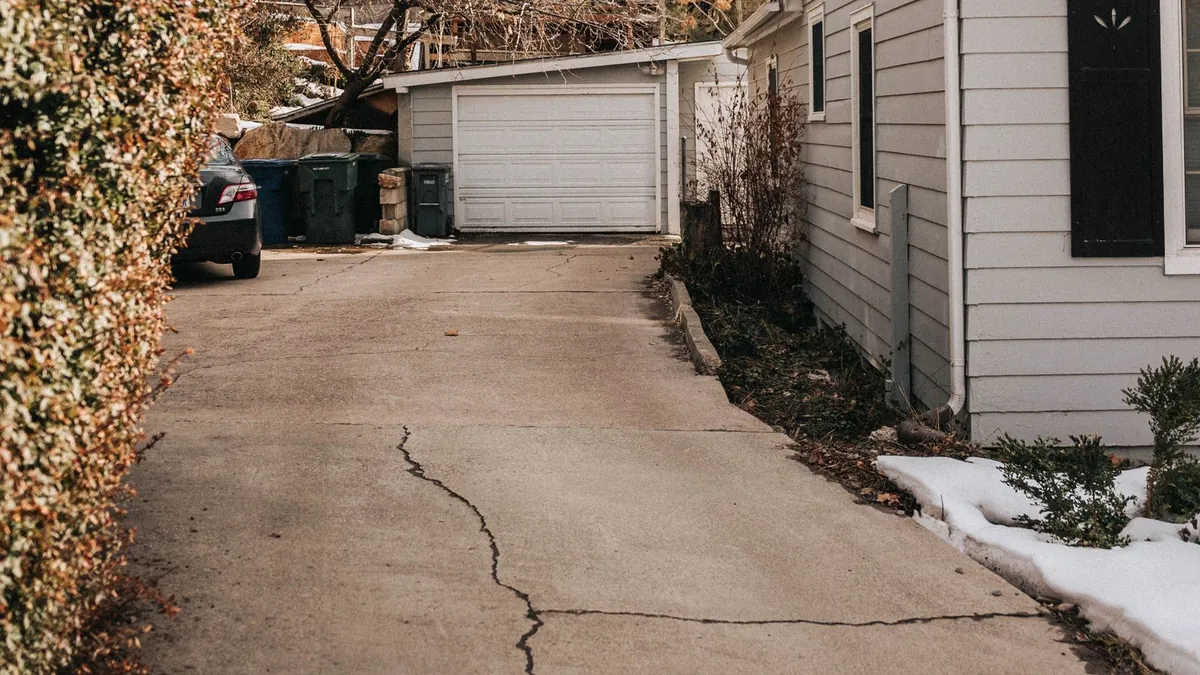
Hairline shrinkage cracks versus cracks that mean movement
Almost every slab cracks. Concrete shrinks as it loses water in the first months, and fine cracks, often thinner than a credit card edge and roughly even on both sides, are a normal result. Cracks sitting in the bottom of control joints are doing exactly what the joints were cut for. These are usually cosmetic.
Cracks that signal a real problem look different. One side is higher than the other, the crack keeps widening from season to season, pieces break loose along its edges, or several cracks radiate from one area. Those point to movement in the ground below. A simple test: lay a straightedge across the crack, and mark its ends with a pencil and a date. If the offset grows or the gap opens over the next few months, the slab is still moving.
Sunken slabs beside the house or garage
A walkway, stoop or driveway panel that has dropped next to the foundation is one of the most common problems in Knoxville neighborhoods built in the last few decades. The soil beside a new foundation is backfill placed after the walls went up, and it is often dumped in rather than compacted in layers. Over the years it settles, and the slab on top follows it down. The same thing happens over utility trenches.
The worst part is usually not the trip hazard. A sunken slab often tilts toward the house, so every rain sends water to the foundation or under the garage door. When you look at a sunken area, notice which way water flows across it and whether the slab itself is still one solid piece.
Heaving from roots and red clay
Some slabs rise instead of sinking. Tree roots growing under a walkway or driveway edge lift and crack it, usually in a pattern that follows the direction of the tree. Clay-rich soils, common across the Ridge-and-Valley, swell when they soak up water and shrink when they dry, which can raise panels, open joints and tip slab edges up at different times of year.
Replacing a root-damaged slab without dealing with the root simply resets the clock. Talk to someone who works with trees before cutting large roots, since that can harm the tree, and consider moving the walk, using a root barrier or accepting some future maintenance. For clay heave, improving drainage and keeping downspouts from soaking the soil beside the slab can reduce the swings.
Scaling and spalling from freeze-thaw and salt
Scaling is the top layer flaking off in thin patches, leaving the coarse stone exposed. Spalling is deeper chips and pockets breaking out of the surface. East Tennessee winters bring many nights that freeze and days that thaw, and each cycle pushes on water trapped in the concrete. Salt from de-icers and road brine dripping off cars makes it worse.
The usual causes trace back to the original pour: concrete that was not air-entrained, water added to make it easier to finish, finishing while bleed water was still on the surface, or poor curing in hot weather. Scaling is a surface problem, and the slab underneath may be perfectly sound, which matters when choosing a repair.
Sinkhole-type depressions in karst areas
Much of the Knoxville area sits over limestone and dolomite, bedrock that slowly dissolves and can form voids and sinkholes. A depression that appears suddenly, keeps growing, has a round or funnel shape, or opens near a slab or foundation is different from ordinary settling and should not be treated as a routine concrete repair.
If you see signs like these, keep people and vehicles away from the area and arrange a professional evaluation, such as a geotechnical engineer, before anyone pours or lifts concrete there. Filling or covering a depression without understanding it can hide a problem that gets worse.
The repair options and what each one is for
Once the cause is clear, the choice becomes much simpler. Each common repair suits a specific kind of failure and is a poor fit for the others.
- Crack filling: flexible sealant in stable cracks keeps water and weeds out and slows further damage. It does not level anything or stop movement.
- Resurfacing or overlays: a thin cementitious or polymer-modified layer can cover light scaling and worn surfaces on a slab that is structurally sound and not moving. Over active cracks or a settling base, the old cracks come back through.
- Slab lifting: injecting foam or a cement-based grout under a sunken slab can raise it back toward level and fill the void. It works when the slab is still in large intact pieces and the settling has mostly stopped.
- Sectional replacement: cutting out and replacing only the failed panels, with the base corrected and dowels tying the new sections to the old, often makes sense when the damage is limited to a few areas.
- Full tear-out: when failure is widespread, the drainage is fundamentally wrong, or the slab was badly built throughout, starting over with a new base can be the better long-term answer.
How to tell if a quote is fixing the cause
A useful repair proposal names the cause before naming the fix. If the contractor says the walkway sank because of settled backfill, the quote should include excavating and compacting that backfill or lifting the slab and filling the void, not just placing new concrete on the same soft ground. If water drains toward the house, the plan should change the slope or add drainage.
Ask each contractor to walk the site with you and explain what they think happened and why. Ask what they will do if they find a soft spot, a void or roots once the old concrete is out. Be wary of any quote that recommends the same solution for every problem, whether that is always replacing or always resurfacing. And if two contractors diagnose different causes, that disagreement is worth understanding before you choose.
Practical next steps before calling for quotes
Take photos of each problem area, including a wide shot and a close-up with a tape measure for scale. Note which way water runs during a rain, where downspouts discharge, and whether the damage has changed over the past year. That record makes estimates faster and more accurate, and it gives you a way to compare how carefully each contractor looked at the job.
Concrete replacement and repair that starts with a diagnosis — common questions
Should I repair or replace my cracked driveway?
Look at what the cracks are doing. Narrow, stable cracks with both sides level can usually be sealed and left alone. Cracks with raised edges, growing gaps, or many broken pieces in one area point to base or drainage problems. If only a few panels are affected, sectional replacement is often enough. Widespread failure across the whole slab is when a full replacement makes more sense.
Can a sunken sidewalk or patio be raised instead of replaced?
Often, yes. If the slab is still in large solid pieces and the settling has slowed, it can be lifted by injecting foam or a cement-based grout underneath. That fills the void and brings the slab back toward level. Lifting does not suit slabs broken into many small pieces, badly scaled surfaces, or ground that is still actively moving. Ask the contractor to explain why lifting fits.
Will resurfacing fix my flaking concrete?
Resurfacing can cover light scaling and a worn surface when the slab below is sound and not moving. It is a thin layer, so it depends on a clean, well-prepared surface to grip the old concrete. It will not hide active cracks or fix settling, and cracks in the slab will usually show through. Ask what surface preparation is included.
Why has the walk beside my foundation dropped?
The soil next to a foundation is usually backfill placed after the walls were built, and much of it was never compacted in thin layers. It continues to settle for years, especially when downspouts and roof runoff keep it wet. Lifting or replacing the slab helps, but directing water away from that strip is what keeps the repair from sinking again.
Is a depression in my yard or driveway a sinkhole?
Parts of the Knoxville area sit on limestone that can form sinkholes, but most low spots are ordinary settling. Be cautious if a depression appears suddenly, grows over time, is round or funnel-shaped, or opens near a foundation. Keep people and vehicles away and have a geotechnical engineer or similar specialist look at it before any concrete work is done nearby.
Can tree roots under my driveway be fixed without killing the tree?
Sometimes. Cutting large roots close to the trunk can seriously harm or destabilize a tree, so talk to an arborist before any root work. Options include rerouting a walk, installing a root barrier along the slab edge, or replacing only the affected section with some added flexibility in the layout. Replacing the concrete without addressing the roots usually leads to the same damage.
Do I need to replace the whole slab if only part is damaged?
Not always. Concrete is divided into panels by joints, and a contractor can often sawcut out only the failed panels, fix the base below them, and pour new sections tied to the old ones with steel dowels. The new concrete will look lighter at first. If most panels are failing or the drainage is wrong across the whole slab, full replacement becomes the better choice.
Talk through your project
Start with the address, what you want poured or replaced, rough dimensions, and a few photos of the area and any existing concrete.
Related work
Concrete Driveways
New driveways, extensions and full tear-out and replacement.
Concrete Patios
Backyard patios and pads that shed water away from the house.
Stamped & Decorative Concrete
Pattern, color and exposed aggregate, and what each asks of upkeep.
Walkways & Steps
Sidewalks, front walks and steps on sloped East Tennessee lots.
Garage, Shed & RV Slabs
Pads sized and reinforced for what will actually sit on them.